
Biology MCQ Quiz - Objective Question with Answer for Biology - Download Free PDF
Last updated on May 29, 2026
Latest Biology MCQ Objective Questions
Biology Question 1:
The term "pleiotropy" refers to:
Answer (Detailed Solution Below)


Biology Question 1 Detailed Solution
The correct answer is One gene affects multiple traits.
 Key Points
- Pleiotropy refers to a situation where a single gene affects multiple phenotypic traits.
- This occurs because the gene encodes a product (such as a protein) that is involved in multiple biological processes.
- Examples of pleiotropy include the gene responsible for sickle-cell anemia, which affects red blood cell shape and provides resistance to malaria.
- Pleiotropic effects can be observed in both normal physiological processes and genetic disorders.
- Pleiotropy is a fundamental concept in genetics and demonstrates how genes can have far-reaching effects on an organism's phenotype.
 Additional Information
- Option 2: Multiple genes affect one trait
- This describes a phenomenon known as polygenic inheritance, where a trait is governed by two or more genes.
- Examples include human height, skin color, and eye color, which result from the combined effect of several genes.
- Polygenic traits often show continuous variation, unlike pleiotropic traits, which are influenced by a single gene.
- Option 3: Gene mutation in one allele
- This refers to a mutation in one copy of a gene (allele) that can affect its function.
- Such mutations can lead to genetic disorders if the mutated allele is dominant or if the condition is recessive and both alleles are affected.
- While this is a distinct genetic concept, it does not describe pleiotropy.
- Option 4: Gene duplication
- Gene duplication is an evolutionary process where a segment of DNA containing a gene is copied, resulting in multiple copies of that gene in the genome.
- This can lead to the evolution of new gene functions or increased gene dosage but is unrelated to pleiotropy.
- Explanation of Pleiotropy:
- Pleiotropy is critical for understanding the complexity of genetic interactions and how single genes can have multiple impacts on an organism's physiology and development.
- It is also significant in studying diseases with pleiotropic effects, such as Marfan syndrome, where a single gene mutation affects the connective tissue throughout the body.


Biology Question 2:
Match the following
|
Scientist |
Contribution |
|
I. Charles Robert |
1. Origin of life on Earth |
|
II. Gregor Johann |
2. Theory of evolution |
|
III. J.B.S. Haldane |
3. Law of inheritance |
Answer (Detailed Solution Below)
Biology Question 2 Detailed Solution
|
Scientist |
Contribution |
|
I. Charles Robert |
2. Theory of evolution |
|
II. Gregor Johann |
3. Law of inheritance |
|
III. J.B.S. Haldane |
1.Origin of life on Earth |
- Charles Robert Darwin,in his book “The Origin of Species”, gave the Theory of Evolution by Natural Selection.
- Gregor Johann Mendel, also known as the father of genetics, gave the Law of Inheritance.
- The theory of origin of life on earth proposed by Haldane was confirmed by the experiments conducted by Stanley L. Miller and Harold C. Urey in 1953.
Biology Question 3:
Which of the following statements is true about Lamarck's theory of evolution ?
Answer (Detailed Solution Below)
Biology Question 3 Detailed Solution
The correct answer is It suggests that organisms can acquire new characteristics through use or disuse of body parts.
Key Points
- Lamarck's theory of evolution is also known as the theory of inheritance of acquired characteristics.
- Lamarck proposed that organisms can develop new traits during their lifetime through the use or disuse of particular body parts.
- These acquired traits are then passed on to the next generation, leading to evolutionary changes over time.
- For example, Lamarck suggested that the long neck of a giraffe evolved because ancestors stretched their necks to reach leaves high in trees, and this trait was inherited by their offspring.
- This theory was one of the earliest models of evolution proposed before Darwin's theory of natural selection.
Additional Information
- Jean-Baptiste Lamarck was a French naturalist who is best known for his contribution to the early theories of evolution.
- Lamarck's theory was later largely discredited by the scientific community, especially after the development of the modern understanding of genetics and Darwin's theory of natural selection.
- Darwin's theory of natural selection contrasts with Lamarck's ideas by suggesting that evolution occurs through the differential survival and reproduction of individuals with advantageous traits, rather than the inheritance of acquired characteristics.
- The concept of use and disuse in Lamarck's theory implies that body parts that are used extensively become stronger and more developed, while those that are not used deteriorate over time.
- Despite its inaccuracies, Lamarck's work was significant in the history of evolutionary thought as it introduced the idea that organisms are capable of change over time.
Biology Question 4:
The structure of DNA was discovered by whom?
Answer (Detailed Solution Below)
Biology Question 4 Detailed Solution
Key Points
- James Watson and Francis Crick discovered the structure of DNA.
- They proposed the double helix model of DNA in 1953.
- Their discovery was based on the work of Rosalind Franklin and Maurice Wilkins, who provided critical X-ray diffraction images of DNA.
- Their model explained how DNA replicates and carries genetic information.
- Watson and Crick were awarded the Nobel Prize in Physiology or Medicine in 1962 for their discovery.
Additional Information
- एल्बिडो Charles Darwin is known for his theory of evolution by natural selection, not for discovering DNA.
- Gregor Mendel is known as the father of genetics for his work on the inheritance of traits in pea plants.
- The discovery of DNA structure was a pivotal moment in the field of molecular biology.
- Understanding the structure of DNA has led to numerous advances in genetics, medicine, and biotechnology.
Biology Question 5:
Which of the following indicates common ancestry?
Answer (Detailed Solution Below)
Biology Question 5 Detailed Solution
The correct answer is Homology.
Key Points
- Homology refers to similarities in anatomical structures or genetic sequences due to shared ancestry. It is a clear indicator of common ancestry.
- Homologous structures arise through divergent evolution, where related species adapt to different environments but retain similarities due to their shared lineage. Examples include the forelimbs of mammals such as humans, whales, and bats.
- Homology can be observed at various levels, including morphological, embryological, and molecular. For instance, the genetic code shared among organisms demonstrates molecular homology.
- Homologous structures may serve different functions across species but exhibit similar anatomical patterns, such as the pentadactyl limb structure in vertebrates.
- Comparative anatomy and phylogenetics rely heavily on homology to determine evolutionary relationships and construct evolutionary trees.
Additional Information
- Analogy:
- Analogous structures are similar in function but differ in anatomical structure and origin.
- These arise through convergent evolution, where unrelated species evolve similar traits due to adaptation to similar environments.
- Examples include the wings of insects, birds, and bats, which serve the function of flight but differ in structural origin.
- Migration:
- Migration refers to the movement of organisms from one place to another for various purposes such as breeding, feeding, or climate adaptation.
- Although migration is an important ecological phenomenon, it is not a direct indicator of common ancestry.
- Epistasis:
- Epistasis is a genetic interaction where one gene influences the expression of another gene.
- It is a concept in genetics related to phenotype expression and is not associated with common ancestry.
- Homology in Molecular Biology:
- Molecular homology involves comparing DNA, RNA, or protein sequences among organisms to determine evolutionary relationships.
- For example, the presence of similar genes such as Hox genes across various species indicates common ancestry.
 Important Points
- Divergent Evolution: Homology is a result of divergent evolution, where species with a common ancestor evolve different traits due to adaptation to distinct environments.
- Phylogenetic Trees: Homology is essential in constructing phylogenetic trees and understanding evolutionary relationships.
- Embryological Evidence: Similarities in embryonic development across species also indicate homology and common ancestry.
- Fossil Records: Fossil evidence often reveals homologous structures, supporting the theory of evolution and shared ancestry.
- Examples: The forelimbs of vertebrates (humans, cats, whales, and bats) and the genetic similarity between humans and chimpanzees (about 98% genetic similarity) are notable examples of homology.
Top Biology MCQ Objective Questions
Which juice secreted by the organs in the alimentary canal plays an important role in the digestion of fats?
Answer (Detailed Solution Below)
Biology Question 6 Detailed Solution
Download Solution PDFThe correct answer is Bile juice, Pancreatic juice.
Key Points
- Bile juice, Pancreatic juice secreted by the organs plays an important role in the digestion of fats.
- Bile juice is secreted by the liver.
- It does not contain any types of enzymes.
- The bile juice helps to make the food alkaline and break down the fat molecules.
- Pancreatic juice is secreted by the pancreas.
- It contains enzymes like amylase, trypsin, pancreatic lipase, nucleases and lipase.
- Secretion of the Pancreatic juice is regulated by the hormones secretin and cholecystokinin.
- Lipase is the digestive enzyme of fat.
- Ptyalin is the digestive enzyme of the Saliva.
- Hydrochloric acid is produced naturally in the human stomach to help the digestion of food.
Ribosomes are sites for
Answer (Detailed Solution Below)
Biology Question 7 Detailed Solution
Download Solution PDFThe correct answer is Protein synthesis.
Key Points
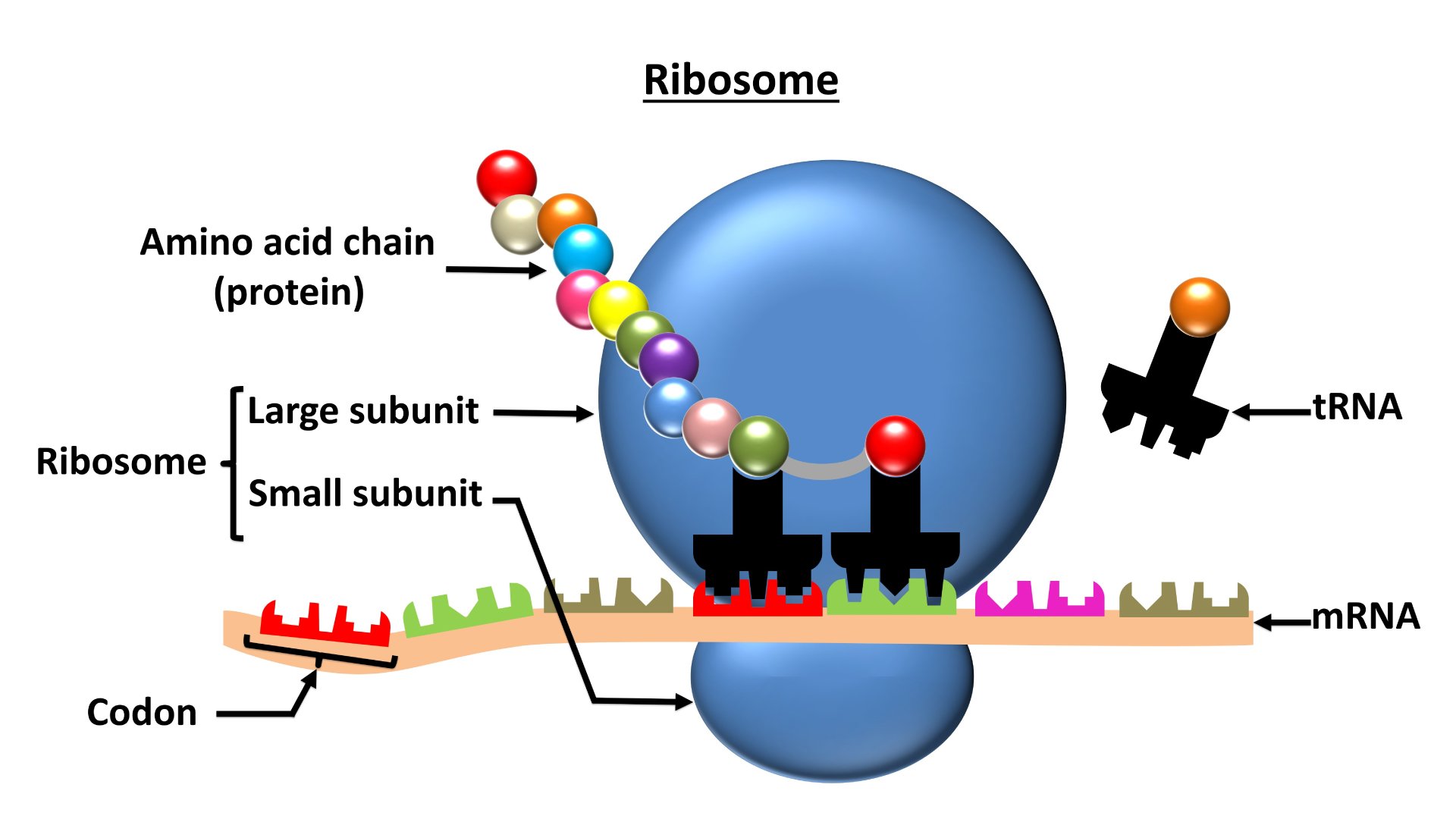
- Ribosomes are non-membranous granular structures present in the cytoplasm.
- They were first observed under an electron microscope as dense particles by George Palade in the year 1953.
- Ribosomes are the site for ''protein synthesis'' so they are also called the ''protein factory'' of the cell.
- There are two types of ribosomes
- Eukaryotic ribosomes - 80s - occurs in the cytoplasm of eukaryotic cell
- Prokaryotic ribosomes - 70s - occur in the cytoplasm as well as are associated with the cell membrane of prokaryotic cell.
- The subunits of the ribosomes are:
- 80s ribosomes - are made of 60s and 40s subunits.
- 70s ribosomes - are made of 50s and 30s subunits.
Important Points
- Composition of the structure of ribosome:
- They are composed of ribonucleic acid (RNA) and proteins
| Type | Composition |
| 70s | 60% rRNA + 40% proteins |
| 80s | 40% rRNA + 60% proteins |
Additional Information
- Photosynthesis: It is the process by which green plants and some other organisms use sunlight to synthesize nutrients from carbon dioxide and water. In this process, plant the chlorophyll, carbon dioxide, water, sunlight, and release oxygen.
- Synthesis of Fatty acids occurs in the cytoplasm.
Which of the following aquatic animals does NOT have gills?
Answer (Detailed Solution Below)
Biology Question 8 Detailed Solution
Download Solution PDFThe correct answer is Whale.
Key Points
- Gills are respiratory organs found in most aquatic organisms.
- Gills can extract dissolved oxygen from water and excrete carbon dioxide.
- Gills can be found in Octopus, Squid, Clownfish, Tadpole, Prawn, etc.
- Lungs are the breathing organ of Whales.
Additional InformationRespiratory organs of different Animals:
| Animal | Respiratory Organ |
|---|---|
| Earthworm | Skin. |
| Whale | Lungs |
| Spider, Scorpion | Booklungs. |
| Cockroach | Trachea. |
| Tadpole, Fish, Prawn | Gills |
| Frog | Skin, Lungs, Buccal cavity |
| Amphibians, mammals, and birds | Lungs. |
Among the following statements which is/are correct?
1. Plants convert energy from sunlight into food stored as carbohydrates
2. Plants have chlorophyll
3. Plant cells do not have cell walls
Answer (Detailed Solution Below)
Biology Question 9 Detailed Solution
Download Solution PDFConcept:
Photosynthesis:
- The leaves have a green pigment called chlorophyll.
- It helps leaves to capture the energy of the sunlight.
- This energy is used to synthesise (prepare) food from carbon dioxide and water. Since the synthesis of food occurs in the presence of sunlight, it is called photosynthesis.
In the presence of sunlight Carbon dioxide + water → Carbohydrate + oxygen.
- Some plants, green algae, and cyanobacteria can perform photosynthesis.
- The process of photosynthesis is commonly written as
6CO2 + 6H2O + Sun-Light → C6H12O6 + 6O2
Plant cells have a cell wall to protect them and make them rigid structure.
Explanation:
1. Plants convert energy from sunlight into food stored as carbohydrate’s - Correct
2. Plants have chlorophyll. - Correct
3. Plant cells do not have cell walls. - Incorrect.
Additional Information
In the plant cells, there are different components and organelles for specific functions-
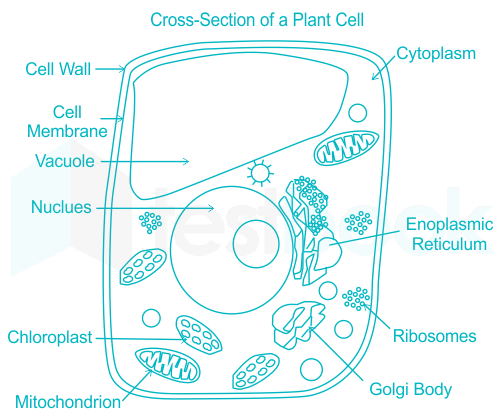
- Cell Wall – It is a rigid layer composed of cellulose. It is the outermost layer of the cell, below this cell membrane is present. The primary function of the cell wall is to protect and provide structural support to the cell.
- Cell Membrane – It is a semi-permeable membrane that helps in regulating and the substance for entry and exit inside and outside the cell.
- Nucleus – It is a vital part of the cell as it contains all the information or DNA of the cell and their heredity information for growth and cell division.
- Vacuole – Most of the part of the plant cell is occupied by the vacuole. It is surrounded by Tonoplast. The vital role of the vacuole is to provide support again the pressure of the cell wall.
- Golgi apparatus – They act as a transport system in the cell, as they transport various molecules to a different part of the cell.
- Ribosomes – They are the sites of protein synthesis, also termed as the protein factory of the cell.
- Mitochondrion – They break the complex molecules and produce energy and hence called the powerhouse of the cell.
- Lysosomes – They are termed suicidal bags as they hold the enzymes that are capable to digest the whole cell itself.
Which of the following organism breathes from skin?
Answer (Detailed Solution Below)
Biology Question 10 Detailed Solution
Download Solution PDFWhich of the following organelles shows similarity to a prokaryotic cell?
Answer (Detailed Solution Below)
Biology Question 11 Detailed Solution
Download Solution PDFThe correct answer is Both chloroplast and mitochondria
Concept:
Theory of endosymbiosis:-
- Symbiotic relationship, where one organism lives inside the other, is known as endosymbiosis.
- The theory proposed that mitochondria and chloroplasts evolved from engulfed prokaryotes.
- A large anaerobic bacteria engulfed an aerobic prokaryote, which then formed an endosymbiotic relationship with the host, gradually developing into a mitochondrion.
- It is believed that chloroplasts originated from a cyanobacterial endosymbiont.

Explanation:
Similarities between Prokaryotic cells, Mitochondria, and Chloroplast:
- Mitochondria and chloroplast are of the same size as prokaryotic cells.
- Mitochondria and prokaryotic cells both have their own circular DNA.
- The ribosome of bacteria, mitochondria, and chloroplasts have a 70S type of ribosome.
- Divides by binary fission.
| Characters | Prokaryotic cell | Mitochondria | Chloroplast |
|---|---|---|---|
|
Extra Circular DNA |
present | present | present |
|
Ribosomes |
70s | 70s | 70s |
| Replication | Binary fission | Binary fission | Binary fission |
| Size | 1 to 10 micrometre | 1 to 10 micrometre | 1 to 10 micrometre |
| Appearance on earth | about 1.5 billion years ago | about 1.5 billion years ago | about 1.5 billion years ago |
| Electron transport system | Found in the plasma membrane of the cell | Found in the plasma membrane of mitochondria | Found in the plasma membrane of Chloroplast |
Which of the following helps in the blood clotting?
Answer (Detailed Solution Below)
Biology Question 12 Detailed Solution
Download Solution PDF- Vitamin K is a vitamin found in leafy green vegetables, broccoli, and Brussels sprouts.
- In the body, vitamin K plays a major role in blood clotting. So it is used to reverse the effects of “blood-thinning” medications when too much is given; to prevent clotting problems in newborns who don’t have enough vitamin K, and to treat bleeding caused by medications.
Tricks:

What is the cell wall of a plant made of ?
Answer (Detailed Solution Below)
Biology Question 13 Detailed Solution
Download Solution PDFThe correct answer is Cellulose.
- Plant cell walls are primarily made of cellulose.
Key Points
- Cellulose is the most abundant macromolecule on Earth.
- Cellulose fibers are long, linear polymers of hundreds of glucose molecules.
- These fibres aggregate into bundles of about 40, which are called microfibrils.
Additional Information
- Carbohydrates are the sugars, starches, and fibres found in fruits, grains, vegetables, and milk products.
- A carbohydrate is a biomolecule consisting of carbon (C), hydrogen (H), and oxygen (O) atoms.
- Lipids are molecules that contain hydrocarbons and make up the building blocks of the structure and function of living cells.
- A lipid is a biomolecule that is soluble in nonpolar solvents.
- A lipoprotein is a biochemical assembly whose primary function is to transport hydrophobic lipid also known as fat molecules in water, as in blood plasma or other extracellular fluids.
- It consists of a Triglyceride and Cholesterol centre, surrounded by a phospholipid outer shell, with the hydrophilic portions oriented outward towards the surrounding water and lipophilic portions oriented inward toward the lipid centre.
The flexibility in plants is due to a tissue called
Answer (Detailed Solution Below)
Biology Question 14 Detailed Solution
Download Solution PDFThe correct answer is Collenchyma.
Concept:
- Collenchyma is a specialized simple permanent tissue that provides support and flexibility to plants.
- This tissue is made up of living cells having uneven thickenings of cellulose, pectin, and hemicellulose on the walls.
- Cells possess chloroplast, then it is involved in manufacturing sugar and starch.
- Provides tensile strength and flexibility to the plant body.
Explanation:
- Parenchyma- this tissue provides support to plants. It also stores food. So this option is not correct.
- Collenchyma- it allows easy bending of plant parts and provides flexibility. So the option is correct.
- Sclerenchyma- this tissue makes the plant hard and stiff. It is present in the husk of a coconut. So the option is not correct.
Additional Information
- Parenchyma is the most common and abundant tissue in plants which is made up of thin-walled living cells having a distinct nucleus.
- The main function of parenchyma is to store and assimilate food. Hence, they are referred to as food storage tissues.
- Serves as a packing tissue to fill the spaces between other tissues and maintain the shape and firmness of the plant.
- Stores waste products of plants.
- Sclerenchyma is a lignified supportive tissue made up of thick-walled and lignified cells.
- Provides mechanical strength to the plant.
Influenza disease is caused by which of the following?
Answer (Detailed Solution Below)
Biology Question 15 Detailed Solution
Download Solution PDFInfluenza disease is caused by a Virus.
|
Diseases |
Caused By |
|
Tuberculosis |
Bacteria |
|
Influenza |
Virus |
|
Fungal Infection |
Fungi |
|
Malaria |
Protozoan |
Trick: Virus influence many Diseases
